Quantcast
Garnish

Wednesday, May 4, 2016

Champagne Julep

Champagne Julep

This weekend is the Kentucky Derby, and everybody is going to be drinking Mint Juleps. The Mint Julep isn't really one of my go-to cocktails; I personally prefer the Whiskey Smash, which makes the important addition of lemon juice to an otherwise very sweet cocktail. But you can't drink a Whiskey Smash while watching the Kentucky Derby - it's got to be a julep. So if, like me, the traditional Mint Julep isn't your favorite, I humbly suggest this variation: the Champagne Julep. It has all the flavor of a Mint Julep drawn out on a beautiful canvas of sparkling wine. It's the perfect twist on the traditional Kentucky Derby beverage.

History: I don't have any information on this one! I got the recipe from Punch, but they don't credit it to anyone. It may be their own invention. There's another Champagne Julep recipe floating around that uses sherry, and it's referred to as a "1940s Champagne Julep," so it seems the concept goes back at least that far.

Champagne Julep

1/2 oz. Cognac
3 oz. champagne or other sparkling wine
1/2 oz. simple syrup
1 dash Angostura bitters
6-7 mint leaves

In a julep tin or rocks glass, combine mint leaves and simple syrup and muddle. Add Cognac, bitters, and champagne. Fill with crushed ice and stir gently. Mound more crushed ice on top. Garnish with a sprig of mint and a lemon peel.

Recipe from Punch.


Wednesday, April 27, 2016

Sherlock & Watson

Sherlock & Watson

I've got a list of cocktail recipes a mile long that I would make if I had the right bitters. There are so many different kinds I'd like to buy. They're much cheaper to invest in than spirits, but their effect in cocktails is also more subtle, so it feels like a bit of a trade-off. Since I'm on a budget, I try to think hard about what I can buy for my bar that will give me the most mileage.

So I was pretty thrilled when I found out that Scrappy's sells sampler packs of their bitters. I generally don't make a big dent in my bitters bottles, so buying tiny sizes in a variety of flavors seemed perfect. When I took a trip to the Boston Shaker the other day, I snapped up the pack with grapefruit, chocolate, lavender, and cardamom. (I also bought the nifty coupe in the photo!)

Scrappy's Bitters

I've definitely learned that it's worth buying better bitters. I used to stock up on Fee Brothers because they were cheap, but there was a specific cocktail that changed my mind. I made the Means of Preservation with their celery bitters a few months back. Then I had the same cocktail at Backbar with Scrappy's celery bitters instead. It was an entirely different drink. I liked it with Fee's, but I loved it with Scrappy's. I was a convert.

The Sherlock & Watson was first on my list of recipes to make with my beautiful new bitters. Scotch, lemon, and an Earl Grey honey syrup are given a spicy, aromatic boost with cardamom bitters. It's perfection. If I had been creating this recipe, I probably would have reached for bourbon or rye, but I always tend to forget about Scotch as a cocktail ingredient. Here, it provides a delightfully subtle smokiness, the intensity of which will depend on what you use. The original recipe recommends American single-malt whiskey or Highland Scotch. I can just imagine making this cocktail with a rich Scotch like Highland Park - it would be even more dreamy. But the only single malts we have in our bar at the moment are the peat-bombs my husband is currently into, so I used some Johnny Walker Red that inexplicably found its way into our possession following a weekend with friends. It still worked well. But the better the whiskey, the better this cocktail will surely be!

History: The Sherlock & Watson was created by Kenaniah Bystrom at Essex in Seattle.

Sherlock & Watson

Sherlock & Watson

2 oz. Scotch or American single-malt whiskey
1/2 oz. lemon juice
1/2 oz. Earl Grey honey syrup*
2 dashes Scrappy's cardamom bitters

Combine all ingredients in a shaker with ice and shake until chilled. Strain into a coupe glass and garnish with a lemon twist.

*For Earl Grey honey syrup: Pour 8 oz. boiling water into a saucepan. Add an Earl Grey teabag and let steep for 10 minutes. Remove the tea bag and add 16 oz. honey (or, if you want to make less, use a ratio of 2:1 honey to tea mixture in the desired quantity). Heat the mixture on medium heat, stirring until the honey is dissolved. Let cool completely before using.

Recipe from Food52.

Wednesday, April 20, 2016

23 Skidoo

23 Skidoo

Ok, let's get right to it. How cute is this clothespin garnish? The first time I ever saw a cocktail with one was on Travelling Bartenders' Instagram feed. I'm not sure if they came up with it, but ever since I've seen it popping up in a number of different places. Not only is it completely adorable, it's also pretty handy if you don't want your garnish floating in your drink. It works great with aromatic herbs like thyme and rosemary.

Since I was dying to use my mini clothespins, the 23 Skidoo seemed like a perfect place to start. This is an elegant, sweet, aromatic cocktail - almost too sweet for my taste, but I like the way the flavors of the St. Germain and thyme syrup work together. It's not the first time I've used thyme as a garnish, but it is the first time I've actually put it into a cocktail. It seems like a natural pairing with gin and sparkling wine.

23 Skidoo

History: The 23 Skidoo comes from Eleven Madison Park in Manhattan. The name refers to a slang phrase from the early 1900's that refers to leaving somewhere quickly. It may appropriately have originated quite close to Eleven Madison Park, at the Flatiron Building on 23rd Street. Supposedly the unique shape of the building caused wind to swirl around its base, and men would gather there to watch ladies' skirts get blown up. Constables would have to force the men to leave the area, and this became known as "giving them the 23 skidoo."

23 Skidoo

1 oz. gin
1/2 oz. St. Germain
1/4 oz. thyme syrup*
1/4 oz. lemon juice
3 oz. sparkling wine

Combine gin, St. Germain, thyme syrup, and lemon juice in a shaker with ice. Shake until chilled. Strain into a coupe or champagne flute and top with sparkling wine. Garnish with a sprig of thyme.

*For thyme syrup, combine 1/2 cup sugar and 1/2 cup water in a saucepan and bring to a simmer, stirring until the sugar is dissolved. Remove from heat. Add 1 tbsp. thyme leaves and let steep for 1 hour. Strain and let cool before using.

Recipe from Serious Eats.

Wednesday, April 13, 2016

Mixology Monday: Cape Cod Swizzle

Cape Cod Swizzle

I dropped the ball on the last couple of installments of Mixology Monday, but I'm happy to be back for April's theme of Swizzles, hosted by Fred Yarm of Cocktail Virgin Slut. I was particularly happy about this theme, because I've never made a swizzle before. I've had the well-known Queen's Park Swizzle a couple of times, but I've never made one at home. I was excited to learn more about them and come up with a recipe of my own.

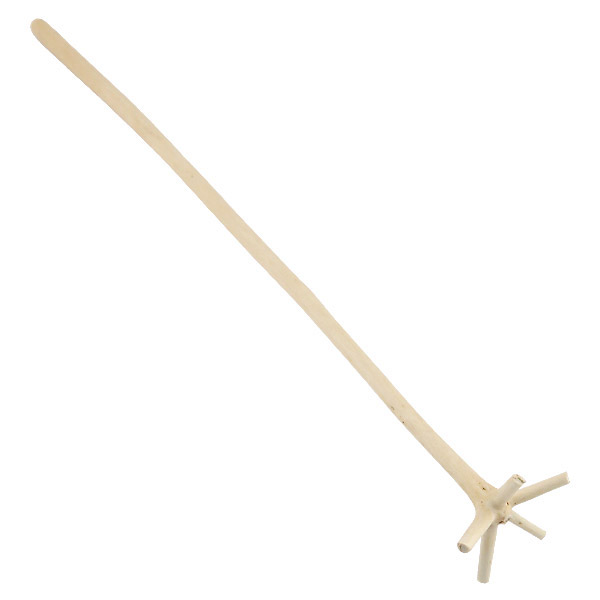
A swizzle is a cocktail that is made with crushed ice that is then mixed using a unique "swizzle stick." We tend to call anything you stick into a cocktail a swizzle stick, but the real thing looks like this. It's inserted into the cocktail, which is served in a tall glass filled with crushed ice, and twirled by rubbing it between your palms ("as if you were a boy scout making a fire," as David Wondrich aptly puts it). This process originated in the Caribbean, where mixtures of spirits, sweeteners, and citrus were swizzled to frosty perfection as early as the late 1800's.

Since it's the first time I've made a swizzle, I didn't want to make my recipe too unusual. I decided to use the Queen's Park Swizzle as a base recipe and add a dash of thoroughly New England flavor: GrandTen's Craneberry cranberry liqueur. My husband and I went on their distillery tour a few weeks ago and were so impressed by it that we had to buy a bottle. If you don't live near Massachusetts, it might be tough to get your hands on, in which case you could also try and make your own. But if you have the opportunity, you've got to try the Craneberry. It uses a base of white rum infused with cranberries and aged in used Cabernet Sauvignon casks. The name refers to what early Massachusetts settlers called cranberries due to the crane-like shape of the cranberry flowers. It's intensely, deliciously tart, and I love what it does for the swizzle.

Craneberry

It's the technique and construction that really makes a swizzle a swizzle, and mine was admittedly quite cobbled together; lacking a Lewis bag and mallet to properly crush my ice, I used a clean dishtowel and an ice cream scoop. I don't have an authentic swizzle stick, so my barspoon had to suffice. But I was still very impressed by how wonderfully frosty the outside of the glass became as I swizzled away, and how the incorporation of the tiny pieces of ice into the drink made it into a cold, delicious, utterly drinkable cocktail. It's exactly what I'd like to be drinking on Cape Cod during the summertime.

Check back here for a link to the Mixology Monday roundup with lots more refreshing swizzle recipes!

Cape Cod Swizzle

Cape Cod Swizzle

2 oz. white rum
1/4 oz. Craneberry or other cranberry liqueur
1 oz. lime juice
3/4 oz. simple syrup
10-12 mint leaves
4 dashes Angostura bitters

Combine mint leaves, simple syrup, and lime juice in the bottom of a glass and muddle well. Add rum and swirl to combine. Fill glass with crushed ice. Gently drizzle Craneberry and Angostura on top. Garnish with a sprig of mint.

After you've finished admiring the lovely layers, insert a swizzle stick or other stirring device into the cocktail. Like a good boy scout, rub it between your palms to stir the cocktail and melt the little shards of crushed ice into the drink. The outside of the glass should become frosty and the whole cocktail should turn a pleasing shade of pink. Add a straw and enjoy.

Thursday, March 31, 2016

Trinidad Sour

Trinidad Sour

One of my favorite new bars in Boston is Hojoko. The cocktails there are incredibly good, but the place doesn't take itself too seriously. They serve brightly-colored cocktails out of those square circulating juice tanks and have a wide selection of frozen drinks and sake bombs. These things aren't usually the mark of a craft cocktail bar, but these same cocktails have ingredients like shochu, absinthe, Fernet Branca, and coconut-infused Campari. The bartenders there have also always been incredibly friendly and informative, willing to discuss the cocktails and their unique ingredients.

The second time I went to Hojoko, I ordered the 1970 Sour. The ingredients were Angostura bitters, Wray & Nephew (a white overproof rum), passionfruit, almond, and sesame. The bartender paused a moment and said, "Ok, but just so you know, Angostura bitters are the base of the drink." I didn't even understand what he meant at first. Angostura bitters are added to drinks in dashes, not ounces. I wasn't sure if I would like it. I assumed an Angostura-based drink would be unbearably bitter. But the bartender assured me that it wasn't, and I figured I'd give it a go.

Wow. I can't remember the last time I was so blown away by a cocktail. Angostura bitters have an incredible rich, spiced flavor that allows them to stand out in drinks even when added in small amounts. When you throw an ounce of them in a cocktail, the result is amazingly flavorful. And it really gives you a sense of what the bitters taste like, and what they're adding to your cocktails in smaller quantities. I really didn't have a good handle on their flavor profile before I tried the 1970 Sour.

After that night at Hojoko, I began seeing Angostura-based cocktails popping up all over the place. So I decided to try and make one myself. It seemed only natural to try the Trinidad Sour, one of the first drinks to give this ingredient a starring role. Imbibe refers to it as a "paradigm shifter" and I think they might be right. This is definitely one of the most unusual things I've tried in a cocktail in a while. I quickly ran through my tiny bottle of Angostura and invested in the much larger 16 oz. size.

Trinidad Sour

The Trindidad Sour is not an overwhelmingly bitter drink. It's rich and incredibly flavorful. It smells a bit like Christmas potpourri. The flavor is deep notes of cinnamon and allspice, with a subtly bitter finish. It's surprisingly bright. And that color! It's easily one of the most beautiful cocktails out there.

History: The Trinidad Sour was invented by Giuseppe Gonzalez at the Clover Club in Brooklyn in 2009. It is based on a slightly earlier cocktail called the Trinidad Especiale, which was invented by Italian bartender Valentino Bolognese for the Angostura European Cocktail Competition in 2008. It uses Pisco instead of rye. The names of both cocktails pay homage to the country where Angostura bitters are made.

Trinidad Sour

1 oz. Angostura bitters
1 oz. orgeat
3/4 oz. lemon juice
1/2 oz. rye whiskey (100 proof preferred)

Combine all ingredients in a shaker. Fill with ice and shake until well-chilled. Strain into a coupe or cocktail glass.

Recipe from Imbibe.

Wednesday, March 23, 2016

Prince of Wales

Prince of Wales cocktail

Guess what? It's been exactly a year since I started this blog. The time really flew by. It's been a lot of fun making all these cocktails and sharing them with all of you. I've learned so much and discovered lots of new favorites. I hope you have, too!

What better to celebrate a year of blogging than a champagne cocktail? And not just any champagne cocktail - one fit for a prince. Or rather, invented by one. The Prince of Wales isn't as well-known as many of its sparkling counterparts, but it's a more than worthy addition to your celebratory repertoire. It's got an elegant, classic flavor. The rye tastes rich with the champagne, the hint of pineapple blending it all together perfectly and elevating the final product beyond the realm of the ordinary. As Paul Clarke of The Cocktail Chronicles writes, "It's a decadent recipe to read, and the drink is obviously the work of someone who takes their refreshment very seriously, and has plenty of time and resources to do so. A prince, in other words."

Prince of Wales cocktail


History: The Prince of Wales cocktail is so named because it was a favorite of King Edward VII when he was still just Albert Edward, the Prince of Wales. And, as his mother was Queen Victoria, until recently England's longest-reigning monarch, he was the Prince of Wales for quite a while - 60 years, longer than anyone else. (Interestingly, the current Prince of Wales, Prince Charles, has held the title of "heir apparent" longer than Edward did, for reasons I'm not going to get into here.) He reigned as King from 1901-1910. His son was George V, and his grandsons were Kings Edward VIII and George VI, whose story was recently depicted in The King's Speech (in case, like me, you get your British monarchs confused unless you have Hollywood movies to orient you).

Edward VII
King Edward VII

Edward had quite the reputation as a playboy and bon vivant. He had several mistresses and was known to frequent a brothel in Paris that had a custom bathtub that could be filled with champagne. We know from the 1901 book The Private Life of King Edward VII, an anonymously-written biography of the king, that he enjoyed drinking champagne as well as possibly bathing in it. The book contains a detailed section on the monarch's drinking habits, including tidbits like "the Prince is not in any sense a beer drinker" and the fact that he kept a small flask of brandy on the side table in his entrance hall at Marlborough House because once a friend of his fell ill there and "no brandy was at hand to restore the sufferer, and the illness proved fatal." Of the Prince of Wales cocktail, the biographer says:

He is also credited with having composed an excellent "cocktail." It consists of a little rye whisky, crushed ice, a small square of pineapple, a dash of Angostura bitters, a piece of lemon peel, a few drops of Maraschino, a little champagne, and powdered sugar to taste. This "short drink" is often asked for at the clubs he frequents.

The recipe was given modern proportions by David Wondrich in his book Imbibe!Though the 1901 recipe post-dates Jerry Thomas' Bon Vivant's Companion, the Prince was probably drinking his concoction around the same time Thomas was tending bar, maybe even in Thomas' bar at one point - a popular story claims that Thomas served the Prince his first Mint Julep in New York during his 1860 visit.

Prince of Wales

1 1/2 oz. rye
1/4 tsp. maraschino liqueur
1 tsp. sugar or simple syrup
1 dash Angostura bitters
1 chunk fresh pineapple
1 oz. sparkling wine

If using sugar, combine with bitters at the bottom of a shaker and add a dash of water. Stir to dissolve. Otherwise, just combine your simple syrup and bitters. Add rye, maraschino, and the chunk of pineapple. Fill the shaker with ice and shake nice and hard ("brutally," Wondrich says) to crush the pineapple. Strain into a goblet or coupe glass. Add sparkling wine and garnish with a lemon twist.

Recipe from Imbibe! by David Wondrich via The Cocktail Chronicles.

Thursday, March 10, 2016

Bottle Buy: Amaro Averna

Black Manhattan

When we were in New York in January, we had a fantastic dinner at Gramercy Tavern with a couple of friends. It was a serious splurge for us; we ordered two bottles of wine and did the six-course tasting menu. It was some of the most incredible food I've ever had. As we dug into the ridiculous assortment of desserts they brought us, the waitress asked if we'd like a digestif. We waffled a bit, not sure what to order, and she offered to bring out a couple of amari.

Amaro has been on my radar as a potential cocktail ingredient, but the reason I hadn't bought any was because there were just so many. I would see them in recipes: Amaro Montenegro, Amaro Averna, Fernet Branca, Amaro Nonino, Cynar, Ramazotti. There was no way I could buy them all, and I had no idea which one would be the best to choose.

That night at Gramercy Tavern, our waitress brought out two: Amaro Averna and Amaro Nonino. We drank them straight up. It was absolutely perfect after our big meal. They were both sweet enough that they worked after dessert but bitter enough to be great digestifs. We agreed that we liked the Averna a little better, which worked out well, because it's the cheaper of the two ($30 vs. $50). As soon as we got back to Boston, we bought a bottle, ready to whip it out after dinner parties to impress our friends.

Amaro Averna

Averna is made by soaking herbs, roots, dried fruit, and citrus rind in a base of grain alcohol. Caramel is later added for flavor and sweetness. Its flavor is described as "exotic spice, wood, maple syrup, cinnamon, and dried orange peel." Supposedly the recipe comes from the Benedictine monks of St. Spirito's Abbey in Caltanissetta, Sicily. (You may recall that the Benedictine monks have a history of making tasty liqueurs.) They had been making the herbal elixir for years when a rich textile merchant, Salvatore Averna, gave a generous donation to their Abbey in 1859. To thank him, they gave Salvatore the recipe. Realizing he had a seriously delicious secret on his hands, he created the company Fratelli Averna in 1868 and began selling Amaro Averna to the public. His son later took over the business and expanded it, selling Averna all over Europe. Currently, the fourth generation of Avernas is running the business, which was acquired by Gruppo Campari in 2014.

Amaro Averna

Price: $30
Alcohol Content: 29%
Popular Cocktails: The Black Manhattan is one of the few that's currently widespread. It's traditionally consumed on its own.

Much as I enjoy drinking Averna straight, I've also started experimenting with it in cocktails, and I'm really liking the result. My go-to right now is the Black Manhattan. There are a lot of versions of this cocktail out there. My favorite so far is the one below, which I found in a Reddit thread about what cocktails to make with Averna. It replaces half the sweet vermouth in my favorite Manhattan recipe with Averna, and half the Angostura bitters with orange bitters.

I think I like the Black Manhattan better than a traditional Manhattan. It's less sweet, but the Averna leaves lingering flavors of raisins and dark fruit. When you taste them side by side, the Averna makes for a deeper, smoother cocktail, blending the rye and vermouth together better into a harmonious whole.

Black Manhattan

Black Manhattan

2 oz. rye
1/2 oz. sweet vermouth (I like Punt e Mes)
1/2 oz. Averna amaro
1 dash Angostura bitters
1 dash orange bitters

Combine all ingredients in a mixing glass and stir until chilled. Strain into a rocks glass or coupe. Garnish with a cherry or orange peel if desired.

Recipe adapted from Reddit user murrayhenson.