Quantcast
Garnish
Showing posts with label St. Germain. Show all posts

Wednesday, February 6, 2019

Widow's Touch

Widow's Touch cocktail

A few weeks ago, I featured a classic cocktail called the Widow's Kiss made with apple brandy, Benedictine, and Yellow Chartreuse. It's a good drink, but not really something I'd like to make again and again. A lot of older cocktails just aren't quite balanced for modern tastes, and even with PDT's adjusted recipe, the Widow's Kiss tastes like something from another time. To me that's part of the appeal.

Widow's Touch cocktail

The Widow's Touch, however, is another matter. I love this drink. It's an updated version of the classic that swaps out the Yellow Chartreuse for St. Germain, and the switch makes all the difference. In Vintage Spirits and Forgotten Cocktails, Ted Haigh calls the Widow's Kiss "a cocktail of fall turning towards winter." In that case, the Widow's Touch is a cocktail of fall meeting spring. It's bright, sweet, and floral with flavors of apple and pear.

Widow's Touch cocktail

History: The Widow's Touch sprang from Boston's fantastic bar scene. It was created by John Gertsen when he was at No. 9 Park. He went on to open Drink, one of Boston's best-known cocktail bars.

Widow's Touch

1 1/4 oz. Laird's Applejack or Apple Brandy
3/4 oz. St. Germain
1/4 oz. Benedictine
1 dash Angostura bitters

Combine all ingredients in a mixing glass with ice. Stir until well chilled and strain into a coupe glass.

Recipe from Bon Appetit.

Monday, May 28, 2018

A Dinner Party with Fonseca Siroco

Fonseca Siroco White Port

Ever since the weather has gotten warmer, I've been looking forward to enjoying dinners on our porch and in our backyard. Usually it's just my husband and I taking advantage of these springtime evenings, but I've always thought an outdoor party with friends would be a lot of fun. So when I was invited to host a dinner party with cocktails made with the Fonseca Siroco White Port, I jumped at the chance to throw the backyard soiree I'd always wanted. I had big plans: white tablecloths, candles, cafe lights, flowers, the works.

Then it rained.

Looking on the bright side, at least this meant we didn't need to carry all our food and supplies down three flights of stairs. It did mean a bit of frantic apartment cleaning and shoving baby gear into closets. But that evening, our friends braved the weather and joined us for a beautiful dinner party with Portuguese food, cocktails, and plenty of Fonseca Siroco.
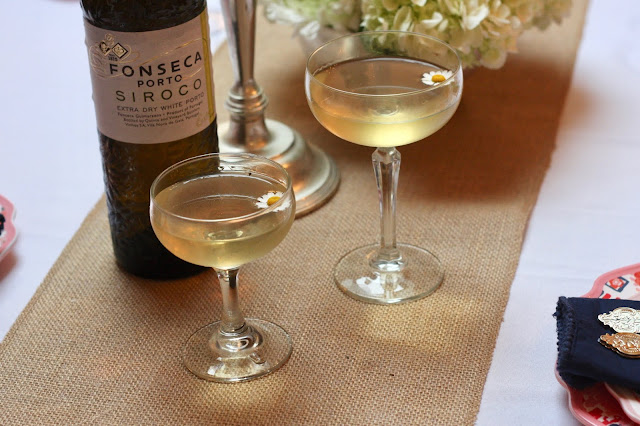
Fonseca Siroco White Port

Let's quickly talk about Port, since it's not something I've used in any recipes on the blog yet. Port is a fortified wine made in the Douro Valley of Portugal. Fortified means that a distilled spirit has been added to the wine, which increases its alcohol content, extends its shelf life and affects its flavor. Other common fortified wines are vermouth, sherry and Madeira. Fonseca is one of the most widely available brands of Port, and their products are consistently very high quality.

When you think of Port, you probably picture a red Port like a tawny or ruby port, which are quite sweet and typically enjoyed after a meal. But white Port like the Fonseca Siroco is generally quite dry. Fonseca Siroco is crisp, fruity, and bright, perfect as an aperitif or with a meal. It's also fantastic in cocktails. The simplest option is just to mix it with tonic water and serve it with a slice of lemon, as it is commonly served in Portugal. Using it instead of vermouth is another easy way to work it into some of your favorite recipes.
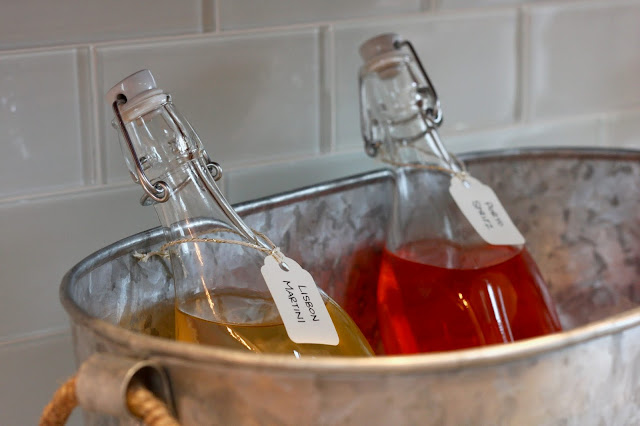
White Port Cocktails

For my Port 'n' Party, I made two cocktails with the Fonseca Siroco that I batched ahead of time so I wouldn't be mixing while my guests were here. The first was a simple spritz made with white Port, Aperol, club soda, and an orange slice. Bright, citrusy and just a bit bitter, it made a great pairing for appetizers. For the second cocktail, I wanted to make something more spirit-forward but still appropriate for spring, so I made a martini with gin, white Port, St. Germain, and chamomile citrus bitters. I absolutely love this one - it's just the kind of cocktail I enjoy sipping on. The St. Germain lends this drink a bit of floral sweetness, but it's still dry enough to have before dinner. We also made some white Port and tonics. The recipes for all three cocktails are below!

Porto Spritz

For dinner, we had Arroz de Tamboril, a rice stew made with monkfish and shrimp that reminded me a lot of the Shrimp Creole we make at home in Louisiana. It's easy to prepare and great for a crowd. Dessert was Serradura, a spectacularly simple combo of sweetened whipped cream and shortbread cookie crumbs. Both recipes came from The Girl Loves to Eat. Our friend Chris of Socktails also brought Pasteis de Nata, which are amazing Portuguese custard tarts. We had plenty of Fonseca Siroco with dinner, and it paired very nicely with the seafood. It had been a long time since we had hosted a party like this one, and we really enjoyed the excuse to get together with friends, even if it was indoors! Maybe a garden party will have to happen later on in the summer. There will definitely be Port cocktails involved.

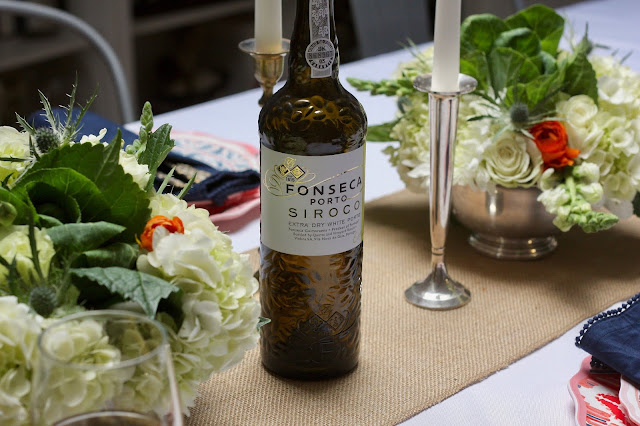
Portuguese Dinner Party


Portuguese Dinner Party


Fonseca Siroco White Port

Portuguese Dinner Party

Fonseca Siroco White Port

Fonseca Siroco White Port

White Port and Tonic

White Port and Tonic

1 1/2 oz. Fonseca Siroco White Port
3 oz. tonic water

Build in a glass over ice, stir gently, and garnish with a lemon slice.


Porto Spritz

Porto Spritz

1 oz. Fonseca Siroco White Port
3/4 oz. Aperol
1 oz. club soda

Combine Port and Aperol in a mixing glass with ice and stir until chilled. Strain into a rocks glass over one large ice cube. Top with club soda and stir gently. Garnish with an orange slice.


Lisbon Martini

Lisbon Martini

2 oz. gin (GrandTen Wire Works)
1 oz. Fonseca Siroco White Port
1/2 oz. St. Germain
1 dash Bittermen's Boston Bittahs

Combine all ingredients in a mixing glass with ice and stir until chilled. Strain into a coupe. Twist a lemon peel over the cocktail, rub it along the sides of the glass, and discard. Garnish with chamomile flowers.

This post was made in partnership with Fonseca Port. All recipes and opinions are my own.

Thursday, May 17, 2018

Sunflower

Sunflower

This week was another fun campaign on Instagram, #WeHaveTheLastWord. Started by Mike of mmydrinks last year, it's a weeklong celebration of one of the greatest cocktails out there, the Last Word. This equal-parts mix of gin, Green Chartreuse, maraschino liqueur, and lime juice is iconic in the cocktail world for its simple recipe and unique flavor. If you haven't had one, you need to make or order one immediately.

As one of the more famous equal-parts cocktails out there, the Last Word lends itself to all sorts of riffs and variations. The Last of the Oaxacans trades the gin for mezcal. The Naked and Famous takes this even farther with Yellow Chartreuse and Aperol instead of the Green Chartreuse and maraschino. The bourbon-based Paper Plane doesn't share a single ingredient with the Last Word, but is still generally considered a variant due to its equal-parts proportions. And if you check out We Have the Last Word on Instagram, you will find countless other variations on this formula containing just about every spirit and liqueur you can think of.

Sunflower

I wanted to create my own riff on the Last Word for the campaign, and even started playing around with some recipes, but I didn't have a chance to perfect one in time. Using equal parts can be a tricky business. Usually when you pick ingredients that you think might work together, you can adjust the amounts of each until they're in perfect harmony. But when you're committed to equal parts, if it doesn't work, it just doesn't.

Not wanting to miss out on all the fun, I turned to my copy of Shake. Stir. Sip. to see if there were any 4-ingredient equal parts cocktails I had never made before. And to my surprise, the first recipe in the 4-ingredient section was not only one I had never made, but it was one that sounded really, really good: the Sunflower. It's actually a riff on the Corpse Reviver, swapping elderflower liqueur for the usual Lillet or Cocchi, but since I've seen some Corpse Revivers and variations posted with the #WeHaveTheLastWord hashtag, I think it will fly.

Sunflower

You can tell the Sunflower is going to be a crowd pleaser long before you taste it. You can't go wrong with gin, lemon, St. Germain, and orange liqueur. It's basically a sunny, floral, boozy lemonade. The absinthe wash might seem a bit polarizing to the casual drinker, but once they try it they'll see that it's fairly subtle touch that really brings the cocktail together, and it keeps the discerning drinker from rolling their eyes at ingredients so tasty and versatile that they might overlook the Sunflower for being too ordinary. Plus, it's a recipe by Sam Ross, creator of the Penicillin and the aforementioned Paper Plane. I will basically drink anything he comes up with, no questions asked.

And man, "Sunflower" is a much happier name than "Corpse Reviver," huh?

History: This cocktail was created by Sam Ross of Milk & Honey and Little Branch in New York, now at Attaboy. He created it around 2008.

Sunflower

Sunflower

3/4 oz. gin
3/4 oz. St. Germain
3/4 oz. Cointreau
3/4 oz. lemon juice
Absinthe rinse

Combine gin, St. Germain, Cointreau, and lemon juice in a shaker with ice and shake until chilled. Pour a dash of absinthe (I used Herbsaint) into a coupe and swirl it to coat the glass. Strain the cocktail into the glass. Garnish with a lemon twist or some sunflower petals.

Recipe from Shake. Stir. Sip.

Tuesday, May 23, 2017

Tequila Old Fashioned

Tequila Old Fashioned

Since I'm not making cocktails during my pregnancy, I've invited some fellow bloggers and cocktail enthusiasts to write guest posts and share their recipes. Today's guest blogger is Instagrammer Morgan Hufstetler!

This past fall I moved to Florida and wanted an Old Fashioned, however it was 85 degrees outside and well, tequila sounded more refreshing. But don't wait till fall to drink this refreshingly boozy concoction. It's a great little drink that doesn't require too many steps and is extremely well-balanced. The bitterness of the Campari is offset by the elderflower liqueur and the Ancho Reyes and tequila pair nicely together.

Tequila Old Fashioned

Tequila Old Fashioned

1 1/2 oz. tequila reposado
3/4 oz. Ancho Reyes
1/2 oz. Campari
1/4 oz. elderflower liqueur (such as St. Germain)

Stir with ice and strain over a giant ice cube or spherical and garnish with a flamed orange twist.

Wednesday, May 18, 2016

Slow Fade

Slow Fade


It's been way too long since I posted a mezcal cocktail. I really like mezcal in a cocktail, whether it's the base or just there to provide a hint of smoke. When I first discovered how much I liked it, mezcal cocktails became my go-to at any bar. Maybe I overdid it, because it's been a while since I ordered or made one. But I will happily break this trend with the Slow Fade.

This cocktail makes brilliant use of smoky mezcal, pairing it with bitter Campari, blanc vermouth, and just a hint of elderflower liqueur for sweetness. A grapefruit twist gives it a beautiful hint of citrus. Honestly, while I tend to avoid grapefruit juice in cocktails - I just don't like the flavor - a grapefruit twist can have a serious impact on a drink. Interestingly, two of the other three cocktails I've made that use one (the Earthbound and the Division Bell) are tequila- and mezcal-based respectively, and include Aperol, Campari's close cousin. I guess the flavors just work together. This cocktail is more spirit-forward and less citrusy than either of those, but they definitely form a nice little trio.

Slow Fade

A note on the vermouth in this recipe. It calls for blanc vermouth, which is different from dry vermouth. It's lighter, sweeter, and less herbal. And I don't have a bottle. Dry vermouth is a fair substitute, but it is going to change the flavor of the final product. But - I can confidently report based on how quickly I'm working my way through this cocktail - it's still really, really good with dry.

One day I'll own every bottle I could possibly want, but until then, we must soldier on.

History: The Slow Fade was created by Henry Prendergast and Robby Haynes at Analogue in Chicago.

Slow Fade

1 oz. mezcal
1 oz. blanc vermouth
1 oz. Campari
1/8 oz. St. Germain (3/4 tsp.)
1 dash Angostura bitters

Combine all ingredients in a mixing glass. Stir with ice until chilled. Strain into a rocks glass over one large ice cube. Garnish with a grapefruit twist.

Recipe from Imbibe.

Wednesday, April 20, 2016

23 Skidoo

23 Skidoo

Ok, let's get right to it. How cute is this clothespin garnish? The first time I ever saw a cocktail with one was on Travelling Bartenders' Instagram feed. I'm not sure if they came up with it, but ever since I've seen it popping up in a number of different places. Not only is it completely adorable, it's also pretty handy if you don't want your garnish floating in your drink. It works great with aromatic herbs like thyme and rosemary.

Since I was dying to use my mini clothespins, the 23 Skidoo seemed like a perfect place to start. This is an elegant, sweet, aromatic cocktail - almost too sweet for my taste, but I like the way the flavors of the St. Germain and thyme syrup work together. It's not the first time I've used thyme as a garnish, but it is the first time I've actually put it into a cocktail. It seems like a natural pairing with gin and sparkling wine.

23 Skidoo

History: The 23 Skidoo comes from Eleven Madison Park in Manhattan. The name refers to a slang phrase from the early 1900's that refers to leaving somewhere quickly. It may appropriately have originated quite close to Eleven Madison Park, at the Flatiron Building on 23rd Street. Supposedly the unique shape of the building caused wind to swirl around its base, and men would gather there to watch ladies' skirts get blown up. Constables would have to force the men to leave the area, and this became known as "giving them the 23 skidoo."

23 Skidoo

1 oz. gin
1/2 oz. St. Germain
1/4 oz. thyme syrup*
1/4 oz. lemon juice
3 oz. sparkling wine

Combine gin, St. Germain, thyme syrup, and lemon juice in a shaker with ice. Shake until chilled. Strain into a coupe or champagne flute and top with sparkling wine. Garnish with a sprig of thyme.

*For thyme syrup, combine 1/2 cup sugar and 1/2 cup water in a saucepan and bring to a simmer, stirring until the sugar is dissolved. Remove from heat. Add 1 tbsp. thyme leaves and let steep for 1 hour. Strain and let cool before using.

Recipe from Serious Eats.

Wednesday, February 24, 2016

Cooper Union

Cooper Union

I'm officially a fan of cocktails that include a bit of smoky, peaty Scotch. I've enjoyed trying different recipes that use it, from the popular Penicillin to the more obscure Avery's Arrack-Ari. I even took a stab at using some in my own recipe with the Blood and Smoke.

It was the Scotch rinse - along with the inclusion of St. Germain, which I have not been using nearly enough lately - that sold me on the Cooper Union. And it's just as good as I imagined. I really like the play of the smoky Scotch with the sweet and floral St. Germain. The orange bitters and twist of lemon add a perfect hint of citrus. This was one that we drank several nights in a row after discovering it. It's the perfect cocktail to sip on in the evening after a long day.

I probably know less about Irish whiskey than any other sort (except maybe Japanese), and I didn't have a bottle in my bar until recently. I went ahead and bought GrandTen Distilling's South Boston Irish Whiskey, which is bottled quite close to where I live. It's quite affordable and very tasty. I thought it worked well in the Cooper Union. I'd love recommendations for other go-to Irish whiskeys for cocktails.

Cooper Union

2 oz. Irish whiskey
1/2 oz. St. Germain
1 dash orange bitters
Laphroig rinse (I used Lagavulin)

Pour a small amount of the Scotch into a rocks glass and turn the glass to coat the edges. Combine whiskey, St. Germain, and bitters in a mixing glass. Stir with ice until chilled. Strain into the prepared glass. Garnish with a lemon twist.

Recipe from Wine Enthusiast.

Monday, February 8, 2016

Trois Pêches

Trois Peches

A few days ago I received an email from Ménage à Trois Vodka inviting me to participate in their Galentine's Day Blogger Challenge.

Galentine's Day is a new one for me. Apparently, this holiday occurs on February 13th, and it's a day for women to celebrate female friendships. As far as I can tell, this involves lots of manicures, spa days, brunches, romantic comedies, and - of course - cocktails.

Trois Peches

Now, the cynical side of me could really have a field day with this. The whole Galentine's Day thing is definitely not my usual style. But the thing is, I love any excuse to celebrate and have a good time with friends. I've never been in the "Valentine's Day is too commercial" camp. A holiday that's all about telling the people you care about that you love them? I can get behind that. And I can get behind Galentine's Day too. Especially when there's vodka involved.

Trois Peches

Ménage à Trois Vodka, to be exact. This is a new venture for the long-time winemakers, and it comes in three flavors: original, berry, and citrus. I got to try all three, which arrived in a big box full of Galentine's Day goodies. The original is really an excellent go-to vodka; I subbed it for the gin I usually put in my martini, and was quite impressed by its smooth flavor. But for a Galentine's Day cocktail, I wanted to play with the flavors in the citrus vodka.

Trois Peches

What I like about the Ménage Ã  Trois Citrus is that it's not too sweet. It may smell a bit like orange candy, but the taste is well-balanced: subtly sweet and tart with a hint of bitterness and spice and a lot of citrus flavor. I decided that peaches would be the perfect thing to pair it with, and I think it works perfectly. I chose St. Germain and Lillet Blanc to add some delicate floral notes that I think do a nice job of enhancing the taste of the vodka. Bright and flavorful, this peach martini is sure to be a hit at your Galentine's Day celebration, or any night with your girlfriends. Or any friends, for that matter.

Trois Peches

Thanks to Ménage à Trois for the opportunity to taste their new vodkas! If you want to see more Galentine's Day cocktail recipes, search #matvgalentinesday on Twitter or Instagram, or check Ménage à Trois Vodka's Facebook page.

Trois Pêches

1 1/2 oz. Ménage à Trois Citrus Vodka
1/2 oz. St. Germain
1/2 oz. Lillet Blanc
1/2 peach

Combine all ingredients in the bottom of a shaker and muddle the peach to release its juices. Add ice and shake until well chilled. Fine-strain into a coupe glass. The mixture will be thick, with lots of peach pulp, but it's worth it - be sure to strain out all that delicious vodka! Garnish with a peach slice and a spring of thyme.

For a sparkling twist on this recipe, try adding a splash or two of champagne!

Wednesday, September 30, 2015

Battle of Trafalgar

Battle of Trafalgar

It wasn't that long ago that my bar consisted of nothing but rye, vodka, gin, dry vermouth, and a couple of tooth-achingly sweet liqueurs. The fabulous bars in Boston slowly introduced me to the world of craft cocktails, but I didn't think I'd ever be able to replicate most of them at home without spending a fortune on liquor. Now I know that this isn't the case; while you'll probably never be able to make everything a great bar can make, you can equip yourself with a lot of really versatile spirits that will give you tons of options.

As I wrote when I introduced Batavia Arrack, the cocktail that changed my mind was the Battle of Trafalgar. This recipe, invented by Aaron Butler at Russell House Tavern in Harvard Square, was so unique and delicious to me and GG that we decided we wanted to be able to make it at home. I searched online for the recipe, assuming I wouldn't find it, but there it was on Cocktail Virgin Slut, straight from Butler himself. Lime juice and honey simple syrup, check. I knew of Pimm's No. 1, and I was excited to see it playing such a central role in a cocktail not involving fizz and fruit. St. Germain was another familiar ingredient, and though I'm not sure we owned a bottle, I had definitely been wanting one. And then there was the Batavia Arrack, entirely foreign at the time but now a familiar sight on our bar. Buying all three was pricey, but they lasted a really long time, and we made a lot more than just Battle of Trafalgars with them.

What is it about this cocktail that was so good that it induced two cheapskates to spend so much on liquor? We just love the flavor. It's deep and sophisticated, with hints of bitter orange and spice and honey-sweet citrus. I think it's a truly brilliant example of cocktail craftmanship.

History: As I said, this cocktail was invented by Aaron Butler at Russell House Tavern. The name refers to a famous naval battle fought by the British against the French and Spanish during the Napoleonic Wars in 1805. It was a great victory for the British, led by Admiral Lord Nelson, whose statue now stands in Trafalgar Square in London. Unfortunately Nelson took a bullet wound during the action and died not long after.

Butler was an English History major, so he was familiar with all this when he named the cocktail. The Pimm's No. 1 is a very British liqueur, and the lime and Batavia Arrack evoke thoughts of the Royal Navy. I can't really explain why, but I've always thought the name was a perfect fit. It tastes like a cocktail Lord Nelson might have enjoyed after a victory.

Battle of Trafalgar

1 1/2 oz. Pimm's No. 1
3/4 oz. St. Germain
3/4 oz. Batavia Arrack
1/2 oz. honey simple syrup*
1/2 oz. lime juice

Combine all ingredients in a shaker with ice and shake until chilled. Strain into a rocks glass. Twist an orange peel over the cocktail and rub it along the sides of the glass, then discard. Toast Lord Nelson and enjoy.

*Honey simple syrup: combine equal parts water and honey and heat on the stove or in the microwave until honey is dissolved. Let cool before use.

Recipe from Cocktail Virgin Slut, courtesy of Aaron Butler.

Friday, July 31, 2015

Coy Mistress

Coy Mistress

Had we but world enough, and time
This coyness, Lady, were no crime
We would sit down and think which way
To walk and pass our long love's day.

My mom flew up to Boston for my dissertation defense. After she sat so patiently through an hour-long talk, wondering what on earth allopatry and ΦST were, I really thought she deserved a cocktail. It is hot today in Boston, so something light and fizzy was a must. She's a big vodka drinker (apparently it's not hereditary) and isn't into minty drinks or ginger beer, so that nixed a lot of the ideas I had offhand. So we created a summery concoction together that we both really enjoyed. I wanted to name it in her honor. She's a researcher in 17th century literature, and she suggested "Coy Mistress" after one of Andrew Marvell's most famous poems.

Coy Mistress

History: I'm going to let my mom take this one:

"Andrew Marvell was a 17th century British metaphysical poet (1621-1678), whose works one scholar has called 'liminal.' Here's an 'in-between' cocktail perfect for a hot summer day in Boston, particularly after a grueling dissertation defense. Marvell's famous poem 'To His Coy Mistress' epitomizes the beauties (and heat) of a torrid affair, to be cooled off by a healthy dose of vodka, St. Germain, lemon juice, simple syrup, and muddled basil. Try it, and see if you still feel 'coy.'"

Well said, Mom.

Coy Mistress

2 oz. vodka
3/4 oz. St. Germain
3/4 oz. lemon juice
1/2 oz simple syrup
4 basil leaves
2 oz. club soda

Muddle basil in a shaker with simple syrup and lemon juice. Add St. Germain and vodka. Shake with ice until well chilled. Strain into a rocks glass filled with ice. Top with club soda and stir briefly. Garnish with a lemon slice and a sprig of basil.

Friday, July 24, 2015

Cucumber Fizz

Cucumber Fizz

This cocktail is a summer favorite of my Dad's and mine. I fondly remember mixing them up on a family trip to the beach last summer (we may have rented a condo for only a few days, but we basically brought a full bar with us.) I made up the recipe after seeing a bartender mix something similar at the Carousel Bar at the Roosevelt Hotel in New Orleans. His version contained St. Germain, and I've included it here as an option, but I honestly love the crisp flavor of gin and cucumber without it. I'm drinking one on my porch as I write, soaking in a summer evening, and I can't imagine a more perfect cocktail for the moment.

I debated a bit about whether to call this a Cucumber Fizz or a Cucumber Collins. As you may recall, a Tom Collins is a cocktail containing gin, lemon juice, simple syrup, and club soda. You can similarly make a Whiskey Collins or a Vodka Collins. But a "fizz" by definition is also a cocktail containing citrus juice, sugar, and carbonated water. I still don't have a satisfactory answer for how a Gin Fizz is any different from a Tom Collins, but I'm going to go ahead and call this a Cucumber Fizz because, well, I like the name.

Cucumber Fizz


As far as what gin to use, Hendricks would be the best. A cucumber infusion makes it ideal for any cocktail with cucumber flavors. But it's a bit pricey for me, and right now I'm really enjoying GrandTen's Wire Works gin made right here in Boston. Your go-to gin ought to be just fine.

If you want to do a variation with St. Germain, add 1/4 oz. or even 1/2 oz. and decrease the simple syrup to 2 tsp. St. Germain really is lovely with these flavors, but it moves the cocktail from crisp and citrusy to sweet and floral. It just depends what you're in the mood for.

Cucumber Fizz

1 1/2 oz. gin
1/4 oz. St. Germain (optional)
2 slices cucumber, halved
1/2 oz. lime juice
1/2 oz. simple syrup
2 oz. club soda

Muddle cucumber, lime juice, and simple syrup in a glass. Add gin, St. Germain (if desired), ice, and club soda. Stir gently and enjoy.

Thursday, May 14, 2015

Maximillian Affair

Maximillian Affair

Boston has a lot of great cocktail bars, and one of the best is Drink in Fort Point. This bar, part of star chef Barbara Lynch's Boston empire, is all about craft cocktails. The staff includes some of the best bartenders in the city, so rather than restrict customers with a menu, the folks at Drink just ask, "What do you like?" Given a base spirit or a few vague hints, they usually whip up something spectacular. That's exactly what happened last time I went. I was with a big group of friends and not sitting at the bar. When the waiter asked what I'd like, I froze - I had no idea. So I just told him I really liked unusual cocktails and to please surprise me. (The bartenders probably groaned when they heard that one.) He came back with a Maximillian Affair.

The Maximillian Affair uses mezcal, which is going to add a strong smoky taste to any cocktail. But to brighten it up and make it drinkable for even the mezcal-averse, it is paired with sweet, floral St. Germain. Punt e Mes and lemon juice round out the recipe. I was thrilled to find the exact proportions online after my visit to Drink. I recently made one for a friend, and he called it a perfect ten. The blending of spirits is really just dead on. It's sweet and sour, smoky and floral. Easily one of my all-time favorite cocktails.

Execution of Maximillian Ferdinand
Manet's depiction of the execution of Maximillian Ferdinand, Emperor of Mexico

History: The Maximillian Affair was invented by Misty Kalkofen when she worked at Green Street in Cambridge, MA. But she now works at Drink, and may have even been the one to make me my first Maximillian Affair - I didn't know enough about the Boston cocktail scene at the time to wonder. The name of this incredible concoction comes from the French invasion of Mexico in the 1860's (Mexico's victory in one particular battle, on May 5, 1862, is the origin of Cinco de Mayo). France had control of the country for nearly five years. Because they were trying to make nice with Austria following the Franco-Austrian war, they installed Maximillian Ferdinand, younger brother of Emperor Franz Joseph I, as Emperor of Mexico. As you might imagine, the Mexicans were none too pleased with this development, and eventually won back their independence and had Maximillian executed (as painted by Manet above). The entire incident has become known as the Maximillian Affair. It's an apt name for a cocktail that blends Mexican mezcal with French St. Germain. Only, in the cocktail, it's a far more harmonious pairing.

Maximillian Affair

1 oz. mezcal
1 oz. St. Germain
1/2 oz. Punt e Mes or other sweet vermouth
1/2 oz. lemon juice

Combine all ingredients in a shaker over ice and shake until chilled. Strain into a cocktail glass or coupe. Garnish with a lemon peel. Raise a glass for poor Max.

Recipe from cocktail virgin slut.

Thursday, May 7, 2015

Means of Preservation

Means of Preservation

This lovely cocktail has a truly unusual taste, and it comes primarily from celery bitters. I don't know what brand John Gertsen, the drink's inventor, used, but my Fee Brothers celery bitters ($8) gave it a savory, spicy flavor with a lot of pepper on the nose. And this article comparing the various brands of celery bitters calls Fee's one of the milder of the bunch! Don't let the St. Germain fool you; this is not a sweet drink. The St. Germain just perfectly balances out the celery for this harmonious flavor that's layered on top of a gin martini. The grapefruit twist, another unexpected addition, adds another aromatic note to the mix.

Fee's is definitely on the cheaper end of the bitters spectrum, and maybe I should start splurging on Bittermen's, Scrappy's, or The Bitter Truth, but the low price tag makes it so easy to try a variety, and that's what I'm about right now. There will be time to test drive the various types when I have a better palate for it.

Celery Bitters

History: The Means of Preservation is a revamp of another cocktail called the Ephemeral, which was concocted by David Shenaut at the Teardrop Lounge in Portland. It has the same ingredients as the Means of Preservation except that it calls for Old Tom gin, which (as you know), is sweeter than the London Dry we commonly use today. The proportions of the other ingredients reflect that. Luckily for those of us who don't have a bottle of Old Tom on hand, John Gertsen of Boston's Drink developed the Means of Preservation, which alters the recipe for London Dry.

Means of Preservation

Means of Preservation

2 oz. gin (Beefeater recommended; I used Tanqueray)
1/2 oz. St. Germain
1/2 oz. dry vermouth (Dolin recommended; I used Martini)
2 dashes celery bitters

Combine ingredients in a mixing glass. Add ice and mix until well chilled. Strain into a coupe glass and garnish with a grapefruit twist.

Recipe from cocktail virgin slut.

Monday, April 13, 2015

Bottle Buy: St. Germain


If you're looking to splurge on a new addition to your bar, St. Germain is the one. Not only will it be the most gorgeous bottle on your shelf, but it's also one you'll find yourself reaching for time and time again. At this point, I consider it something of a necessity.

St. Germain is an elderflower liqueur. These tiny white flowers are hand-picked in the French Alps and, according to the makers of this charming concoction, bicycled to a nearby village before being shipped to the distillery. A tiny bicycler appears on the label above the name as an homage to this. Despite this old-fashioned process, St. Germain is a modern spirit - it was created in 2007. It was the first really new liqueur to come out in a long time, and its popularity exploded. By the time I had heard of it, it was already so ubiquitous that I assumed it had been around for a century.


What does elderflower taste like? St. Germain calls itself "La vie Parisienne en bouteille" ("The Parisian life in a bottle"), and this description seems oddly fitting when you taste it. It's very sweet and floral, with strong notes of pear. I find it too sweet to drink on its own (though people do), but added to a cocktail it is sheer perfection. It blends well with other ingredients. More than that, it blends unexpectedly with other ingredients. My favorite St. Germain cocktails so far are the Maximillian Affair, which pairs it with smoky mezcal, and the Battle of Trafalgar, which combines it with Pimm's and Batavia Arrack. It is perfect in both.

St. Germain

Price: $40
Alcohol Content: 20%
Popular Cocktails: St. Germain Cocktail/Hummingbird, St. Germain and Champagne

To really get a feel for St. Germain and it's dreamy taste, it's best to keep the cocktail simple, like the one below. The Vieux Mot, invented by Don Lee at PDT in New York, uses gin, lemon juice, and simple syrup to give the St. Germain the lead role. Vieux Mot literally means "old word" in French, but it refers to an old wise or witty saying.


Incidentally, a company in Somerville, MA is now making their own elderflower liqueur from American elderflowers called St. Elder. It has a slightly higher alcohol content. Tasting both next to each other, I'm afraid there was just no contest. The St. Elder just didn't have the harmonious flavor of the St. Germain, and wasn't as smooth. In a cocktail, though, I'm sure the difference would be subtle. I've already seen it replacing St. Germain in cocktails at Russell House Tavern, and I imagine it will continue to grow in popularity, given that it's half the price.

That bottle, though... I might just have to pour the St. Elder into an empty St. Germain bottle for display purposes.

Vieux Mot

1 1/2 oz. gin
1/2 oz. St. Germain
3/4 oz. lemon juice
1/2 oz. simple syrup

Combine all ingredients in a shaker over ice and shake until chilled. Strain into a coupe glass. No garnish.

Recipe adapted from The PDT Cocktail Book.